Knowing when to change the current
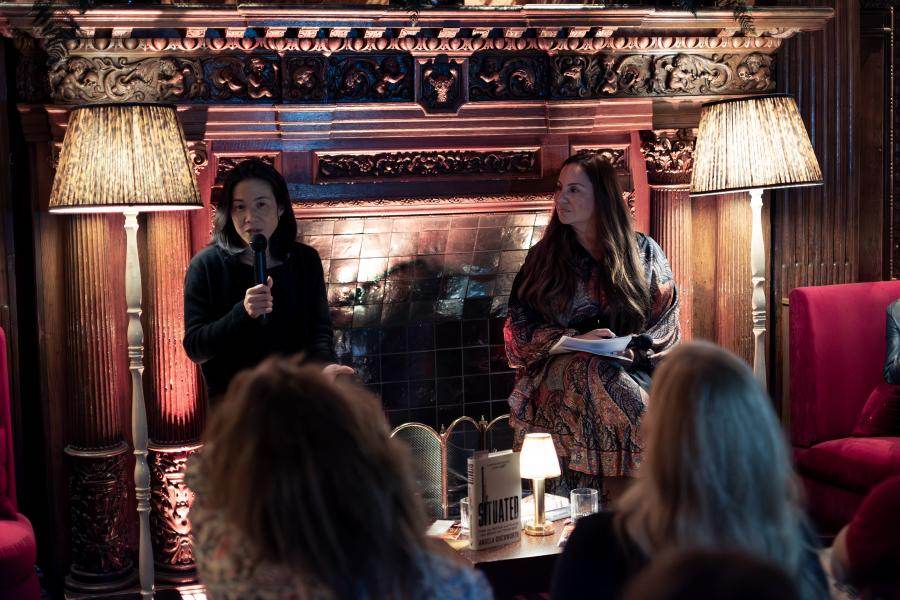
I thought I knew what we were going to talk about when I arrived at Tramp on Saturday afternoon: grit, obviously.
Dina sat down with Angela Duckworth — psychologist, professor and author of Grit — for what turned out to be a much more personal conversation than I had expected.
Dina began where we often begin at The Kid in Her: with the kid. Angela — or Angie, as those close to her call her — is the daughter of Chinese immigrants. Her father was ambitious and intensely focused on achievement; her mother was an artist, generous and giving. It was a childhood that clearly shaped much of the thinking that would come later.
Her father famously told her, more than once, “You’re no genius.” Angela admits it left her with something of a chip on her shoulder. Years later, she was awarded a MacArthur Fellowship — often referred to as the “genius grant”. She remembers telling her father that, technically at least, she could now call herself a genius. There was something wonderfully satisfying about that particular full-circle moment.
We laughed, but there was something in that story that stayed with me. We spend so much time measuring ourselves — and our children — against other people. Who is smarter, more talented, more naturally gifted. Yet, as Angela pointed out, the people we thought were the cleverest, prettiest or most capable when we were young didn’t necessarily end up where we imagined they would. Perhaps putting a metric on intelligence, particularly with our children, simply puts a ceiling on what they believe they can become.

Which brought us, naturally, to grit. Angela describes it as passion and perseverance towards a goal over a very long period of time. Michael Phelps was one of her examples. His extraordinary success wasn’t simply about talent; it was also about the consistency and determination behind it.
But it was what came next that I found most interesting. Dina asked whether children who grow up with privilege can still develop grit — a question I had been hoping she would ask.
Angela’s answer was wonderfully simple: challenge and support. Give children things to do that they cannot yet do. Let them struggle a little. Don’t create a cocoon around them. But underneath all of that challenge should sit something completely unconditional: the knowledge that your love has nothing to do with their achievements. As Angela put it, “I will love you no matter what. Tomorrow, do better.”
“I will love you no matter what. Tomorrow, do better.”
From there, the conversation began to turn Grit slightly on its head, because sometimes working harder simply isn’t the answer.
Angela’s new book, Situated, explores the idea that where we put ourselves can matter as much as how hard we push once we get there. French swimmer Léon Marchand didn’t lack grit, but moving to the US to train with Bob Bowman, Michael Phelps’s longtime coach, changed his situation — and, with it, what became possible.
Angela then told us a story about snorkeling with her mother and getting caught in a difficult current. Her instinct was to swim harder, to fight it, until she realised that trying harder wasn’t going to save them. She needed to change the situation.
It was a story that seemed to touch everyone in the room, and perhaps because so many of us have been brought up to believe that if something matters enough we should simply work harder at it, the idea felt almost liberating. Working hard is an incredibly valuable tool, but it isn’t the only one. Sometimes you need to change the current.
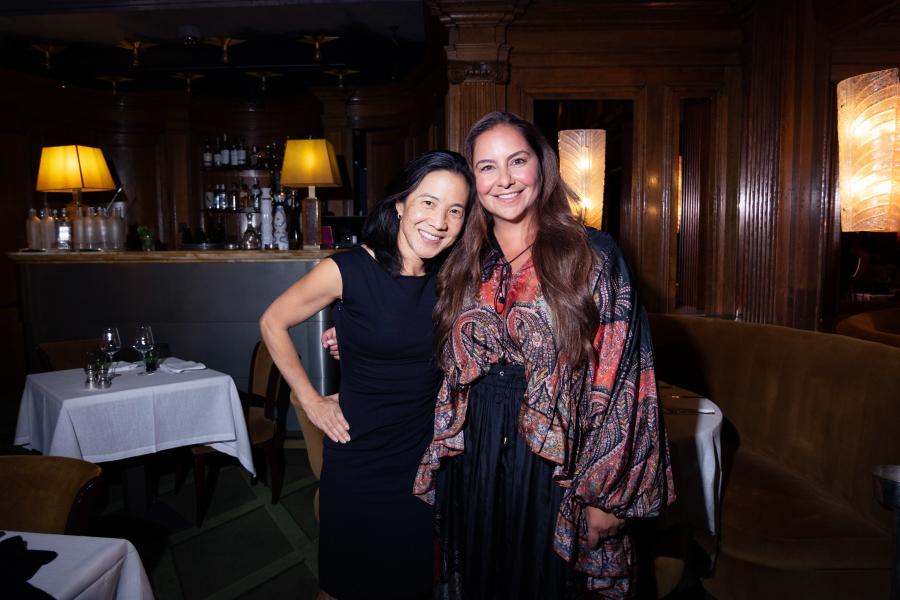
That might mean changing the room, removing the distractions or finding people who share your interests and ambitions. Angela spoke about the importance of peers, mentors and community, and reminded us that high achievers are rarely loners. We become better by interacting with and learning from other people.
Sitting in a room created by The Kid in Her, surrounded by people who had chosen to spend their Saturday afternoon doing exactly that, the point wasn’t lost on us.
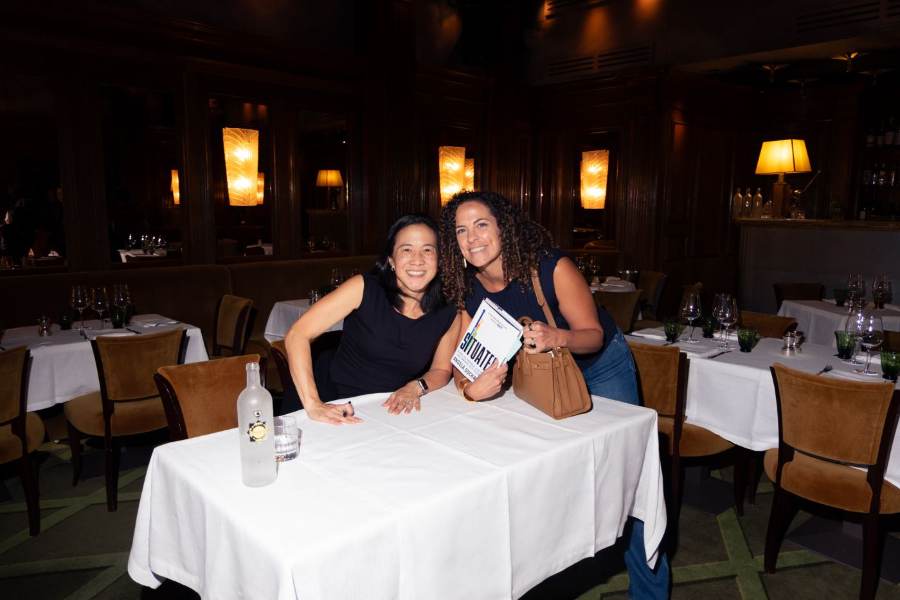
Dina finished by bringing the conversation back to where it had started, asking Angela what she would tell the kid in her today. Her answer, in essence, was to enjoy the process and find something you genuinely love doing.
Maybe that was the part I liked most. We had spent the afternoon talking about success, ambition, perseverance and achievement, and yet the message I left with was a gentler one: have grit, work hard and challenge yourself, but know when to stop fighting the current — and make sure you’re enjoying the swim.