Financial fluency and confidence
Language has always shaped proximity to power. In finance, perhaps more than in any other industry, terminology operates as a quiet filter. It is efficient, compressed and often inherited rather than explicitly taught. Conversations about markets, inflation, equities or central bank policy unfold quickly, assuming shared understanding. When that assumption is unmet, participation narrows – not because of a lack of intelligence, but because of a lack of translation.
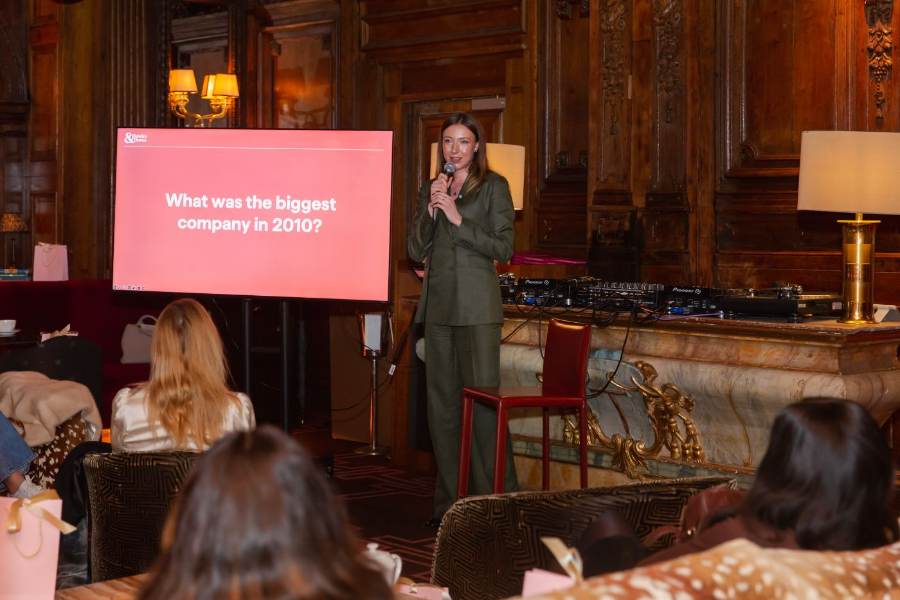
This dynamic formed the foundation of a recent conversation hosted by The Kid in Her, where Dina Geha welcomed Morgaine Conway-Grim, founder of Hawks & Doves, to explore what financial fluency truly means and what this fluency looks like without needing to be a financial professional.
The premise was not that every woman in the room should become a portfolio manager. It was far more practical and powerful: that understanding the architecture of financial language fundamentally changes how one participates in professional and social environments where money inevitably surfaces.
The role of translation
Morgaine Conway-Grim brings more than a decade of experience across investing and relationship roles at institutions including J.P. Morgan and GQG Partners. Having operated inside global financial systems, she became acutely aware of a recurring gap. Even highly capable professionals were frequently taught products and processes without being given a coherent understanding of the broader architecture of markets. They learned vocabulary and passed exams, but they were rarely invited to connect the system as a whole.
When she founded Hawks & Doves in 2024, it was in response to this gap. Her work now focuses on training junior teams and institutions to understand markets holistically – moving beyond memorised terminology, and towards conceptual clarity. What distinguishes her approach is not simplification, but translation. Complex ideas are not diluted; they are contextualised.
During the session, she unpacked the language that frequently surfaces in professional settings: why “hawkish” and “dovish” signal central bank orientation toward inflation; how “bullish” and “bearish” capture sentiment rather than certainty; what “alpha” measures in relation to benchmarks that are themselves constructed comparisons. As these terms were examined, the atmosphere shifted from intimidation to recognition. The vocabulary was not inherently inaccessible; it had simply never been decoded in an inclusive way.
Finance as psychology, not just mathematics
This distinction matters because financial language does more than describe markets; it shapes behaviour. Markets themselves are psychological ecosystems influenced by fear, optimism, herd dynamics and reaction to policy signals. Understanding this interplay equips individuals not only to interpret headlines more accurately, but to regulate their own responses to volatility and uncertainty.
Understanding finance, therefore, is not simply about memorising terminology. It is about recognising patterns of response and discerning whether a market movement reflects structural change or temporary volatility. It is about separating noise from signal.
For women operating across entrepreneurship, corporate leadership, philanthropy and creative industries, this knowledge extends beyond intellectual curiosity. Capital influences growth trajectories, funding environments, valuation, negotiation leverage and long-term planning. Financial fluency therefore becomes less about technical mastery and more about strategic composure. It allows one to ask sharper questions, to evaluate risk with greater clarity, and to engage in discussions about investment and economic outlook without deferring automatically to others.
Access as empowerment
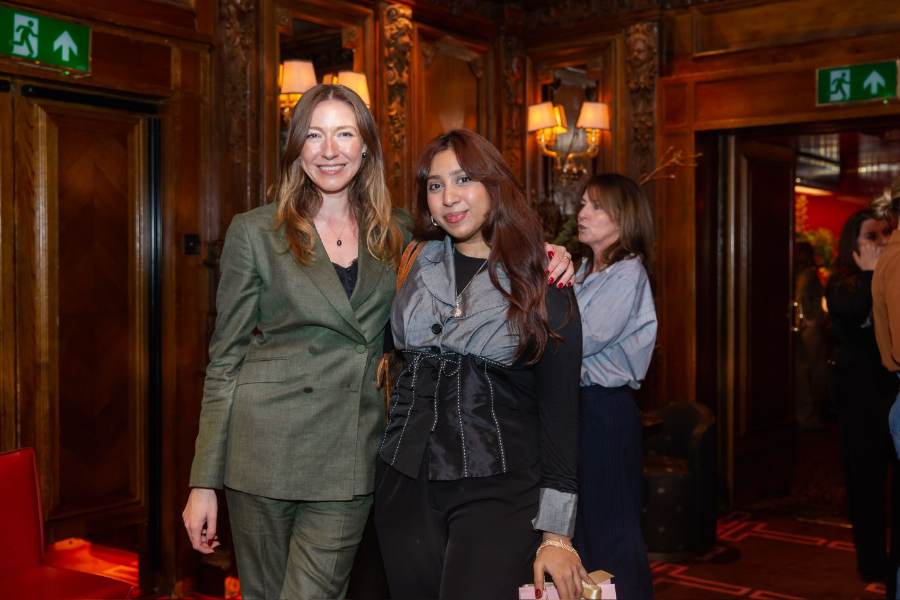
Under Dina Geha’s leadership, The Kid in Her has consistently focused on access, not just to opportunity, but also to understanding. As a senior finance executive and long-standing advocate for women’s advancement across business and philanthropy, Dina understands firsthand how economic systems influence leadership trajectories. Her positioning is deliberate: empowerment is not abstract. It is informed.
Throughout the session, financial literacy was framed not as a technical aspiration, but as a strategic necessity. By convening voices such as Morgaine’s, Dina reinforces the platform’s broader mission: to bridge worlds that often remain siloed. Finance and creativity. Corporate authority and community leadership. Ambition and reflection. The intention is not to create financiers, but to create informed participants.
Fluency without conversion
What emerged from the conversation was not a checklist of definitions, but a reframing of fluency itself. One does not need to convert careers to participate meaningfully in economic discourse. Fluency can mean recognising patterns, understanding directional signals, and feeling sufficiently grounded to request clarification without apology. It can mean discerning the difference between short-term noise and structural change. Most importantly, it can mean refusing to equate unfamiliar jargon with personal inadequacy.
In this sense, financial literacy becomes an instrument of agency. When women understand how markets communicate, they reposition themselves within conversations that influence capital allocation and strategic decision-making. They negotiate differently, invest differently, and they assess opportunity with a broader lens.
This reframing shifts the objective from mastery to participation. When unfamiliar language is decoded, hesitation diminishes, questions sharpen, confidence expands, and over time, confidence compounds.

Repositioning in the room
Ultimately, the conversation put the spotlight on something larger than vocabulary. Financial systems influence virtually every domain – from entrepreneurship and corporate strategy to philanthropy and public policy. To understand how those systems communicate is to reposition oneself within them.
Women who increase their financial literacy do not simply accumulate knowledge: they evaluate opportunity through a wider lens and recognise that unfamiliar jargon is not evidence of incapability, but of exposure that can be acquired.
Language carries power because it shapes who feels entitled to speak. By demystifying financial discourse, The Kid in Her expands that entitlement. Through conversations like the one with Morgaine Conway-Grim, the platform continues to assert a subtle but transformative idea: when women gain access to the architecture of economic language, they do not just join the conversation, they influence it.
And influence is where confidence becomes impact.